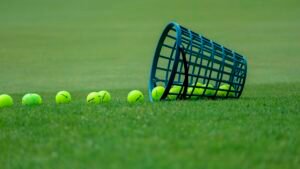
Ever wonder why a player can execute flawless forehands during basket drills, only to shank the exact same shot during match point? Isolated mechanics don’t prepare athletes for unpredictable match environments.
Ecological Dynamics (ECO) shifts coaching from rigid stroke scripts to adaptable problem-solving on court. Here are the 5 core takeaways:
1. Most “Taught” Skills Aren’t Actually “Learned”
Static drills create an illusion of competence. Under ECO, a skill is only learned if it transfers to match play and is retained over time. If a stroke breaks down in competition, the issue isn’t player focus—it’s practice design that severed technique from game context.
2. Practice “Repetition Without Repetition”
True skill isn’t repeating a static swing; it is repeating the process of finding a solution under shifting conditions. When players self-organize movement solutions around task goals, each attempt delivers double the learning value of traditional repetition (“twice as good in half the time”).
“The body cares very little about what the coach has to say.”
— Franz Bosch, Biomechanics Expert
3. Perception and Action Are Inseparable
Tennis is reception then projection. You cannot separate reading the incoming ball and opponent from executing the stroke. Effective practice must keep live cues, decision-making, and opponents attached to physical actions
4. Guide Learning with Constraints (CLA)
Instead of giving endless technical orders, coaches manipulate **Task Constraints** (space, time, and rules) to guide natural technical discovery.
5. Embrace Individual Adaptation
One-size-fits-all forehands don’t work. Skills operate within dynamic biomechanical parameters (attractors), but players must explore different stances, grips, and movement solutions to build an authentic, adaptable style.